How Hail Damage and Insurance Claims Work in Castle Rock
Castle Rock sits on the flank of the Palmer Divide, the high ground that helps brew Front Range hailstorms, and the record shows it. NOAA's Storm Events database logs a dozen entries of 1.00 inch or larger hail for Castle Rock since 2016: stones to 2.50 inches on June 8, 2019 (the standout event of the decade), 1.50 inches on August 5, 2017 and July 1, 2016, and repeated 1.00 to 1.25 inch events through 2020 and 2021. In 2026, storm reports tracked the June 8 corridor from Lakewood east through Castle Rock and The Pinery with metro stones reported at 2.5 inches and larger. If you own a roof here long enough, hail will find it. What matters is what you do in the two weeks after.
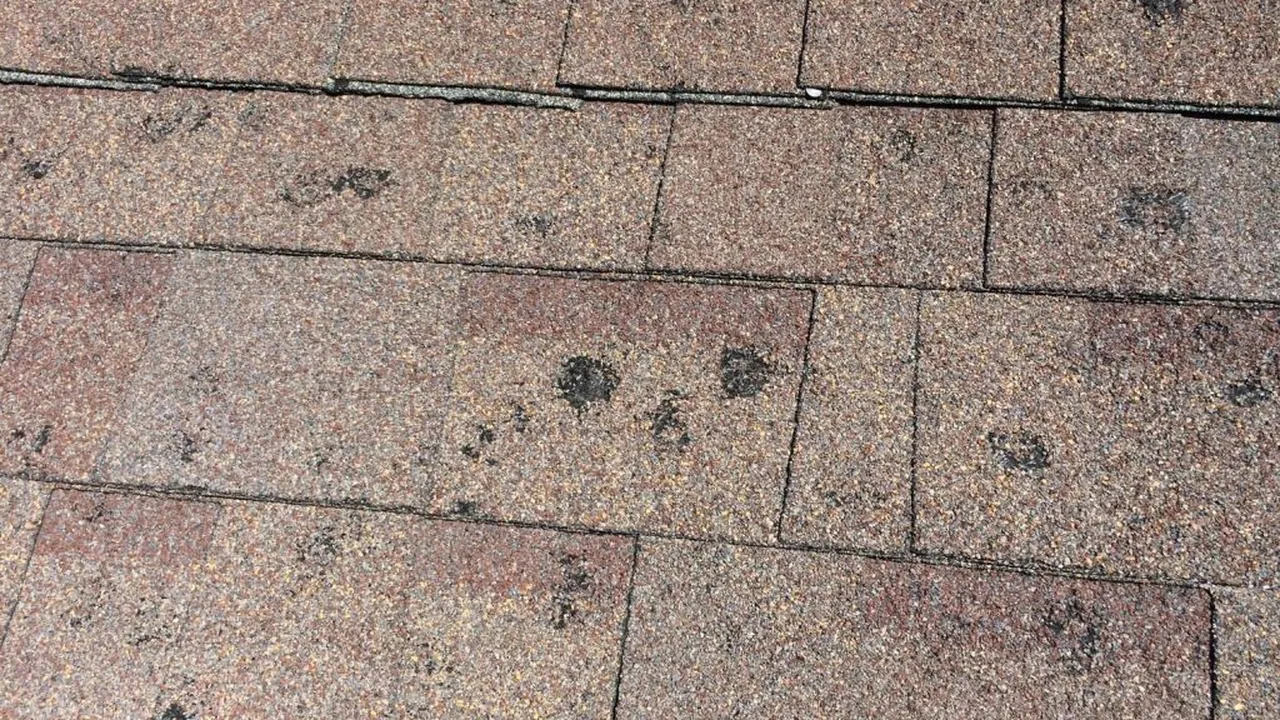
Inch-plus hail bruises asphalt shingles: it crushes granules into the mat, breaking the fiberglass reinforcement even when nothing looks torn from the ground. Bruised mats crack through seasons of altitude UV and freeze-thaw, and the roof starts leaking one to three years after the storm, long after the claim window has closed comfortably. That is why the inspection needs to happen within weeks of a hail event, not after the first stain on the ceiling.
- 1. Documented inspection. We photograph every slope with date stamps, chalk test squares, and match damage against the storm date, NOAA entries and published storm reports. You get the full report whether or not you file.
- 2. The deductible decision. Colorado carriers have broadly moved wind-hail to separate deductibles: flat $2,500 to $10,000, or 1 to 5 percent of dwelling coverage. Reported state averages run around $5,664 against typical dwelling limits. On Castle Rock's median home value of $695,900 (ACS 2024), a 2 percent deductible is roughly $14,000, which changes whether filing makes sense. We put the repair price next to your deductible before you call your carrier.
- 3. Adjuster meeting. We attend, walk the adjuster to every documented test square, and speak shingle-to-shingle so scope items do not silently vanish.
- 4. Claim-scoped work. The approved scope becomes the working scope. Castle Rock rules still apply: permit through eTRAKiT, 100 percent tear-off, mid-roof inspection, and wildfire-code checks on the replacement assembly.
- 5. Completion records. Final inspection, closed permit and an invoice set that matches the claim paperwork for your carrier and your records.
Colorado's residential roofing law gives homeowners a 72-hour right to rescind a roofing contract after signing, and it is illegal for a contractor to pay or waive your insurance deductible. Treat any offer to "eat the deductible" as the red flag it is: it is insurance fraud with your name attached. We also recommend verifying any contractor's Castle Rock registration; the Town calls hiring unregistered contractors unlawful, and storm waves always pull out-of-state door-knockers up and down the I-25 corridor.
Considering Class 4 for the replacement? A hail claim is the cheapest moment to upgrade. The incremental cost of UL 2218 Class 4 impact-resistant shingles is small when insurance is already paying for the roof, and Colorado insurers commonly discount premiums 15 to 35 percent for Class 4 roofs.
- "No broken shingles, no damage." Bruising is invisible from the ground and lethal over two Palmer Divide winters.
- "Filing always raises my rates." Hail claims in Colorado are typically treated as acts of God; carriers reprice by territory-wide hail risk. The deductible math, not fear, should drive the decision.
- "Any metro roofer can run the claim." The claim, maybe. The mid-roof inspection, the stepped snow loads and the wildfire-code assembly check are Castle Rock specifics, and missing them stalls the job after the insurer has already cut the first check.
- "I have years to deal with it." Policies set claim-filing windows, and matching damage to a specific storm date gets harder as seasons stack. Two weeks is the right timeline for the inspection; it is free either way.
Knowing the test helps you understand the report. Adjusters typically chalk a 10-foot-square test area per slope and count hail strikes: bruises with granule displacement and a soft spot under thumb pressure, not just cosmetic scuffs. They look for corroborating evidence, dented soft metals like gutters, downspouts, vents and AC fins, because metal takes dents at sizes that bruise shingles. They check collateral evidence around the property: window screens, fences, deck stain, garden beds. And they date-match against storm records, which is where our NOAA references and the reported June 8, 2026 corridor documentation do their work. When our inspection report already contains all four layers, the adjuster meeting is a walk-through instead of a debate.
- Days 1 to 3: photograph anything obvious from the ground, note the storm date and time, and check soft metals around the house: gutters, vents, AC fins, mailbox. Do not sign anything on the porch, no matter how friendly the clipboard.
- Week one: documented professional inspection. Free, in writing, slope by slope. If there is no claim-level damage, you now have a dated clean-bill report that helps at the next storm.
- Week two: if damage warrants it, file with your carrier, share the report, and set the adjuster meeting. We attend. The 72-hour rescission right applies to any contract you sign, and no legitimate contractor needs you to sign before the adjuster meets us on the roof.
Most Colorado homeowner policies pay hail claims on replacement cost value: the carrier first releases the actual cash value, the depreciated worth of your old roof, and holds back the recoverable depreciation until the work is completed and invoiced. That holdback confuses more homeowners than any other part of the process, and it is where sloppy contractors create real trouble by invoicing carelessly. Our completion package, final invoice matched to the approved scope, closed Town permit, photos, is built to release that depreciation cleanly. If your policy is ACV-only on roofs, an increasingly common cost-saving endorsement, the math changes substantially, and we will flag it the moment we read your declarations page.
- Does the inspection obligate me? No. The report is yours either way, and plenty of ours end with "monitor, no claim warranted."
- My neighbor got a new roof; do I automatically qualify? No, and be wary of anyone who says otherwise. Swaths are narrow and roof ages differ; your slopes get their own test squares.
- The storm was months ago; is it too late? Often not, but policies set filing windows and evidence fades. The sooner the roof is documented against the storm date, the stronger the claim.
- Can I use the claim money for a better shingle? Yes. The carrier owes for like-kind replacement; upgrading to Class 4 from there is your call and usually a small delta, the best-value moment to make the jump.
- Who deals with the mortgage company's name on the check? We walk you through the endorsement steps; they are routine, just unfamiliar the first time.
The adjuster's first scope is an estimate written in a hurry after a storm that filled every carrier's queue, and it regularly misses items that Castle Rock code makes non-optional: full tear-off labor and disposal, ice barrier where the IRC ice-damming provisions require it, drip edge on all eaves and rakes, and any assembly requirement the wildfire-code classification adds. Those gaps get fixed through a supplement, an itemized request to the carrier documenting the code item, its requirement source and its cost. This is routine paperwork when it is done with receipts, and hostile guesswork when it is not. Our supplements cite the Town's published requirements line by line, which is why they tend to clear review instead of ping-ponging. The homeowner's role is simply to know the first check is rarely the final number, and to hire a contractor who documents rather than shrugs.
Every confirmed corridor pulls a wave of out-of-state trucks down I-25, and some of them are fine roofers. The screen is simple and local:
- Town registration, verified. Castle Rock calls unregistered work unlawful. Ask for the registration and check it with the Building Division before signing, including ours.
- Fluent in the Town's rules. Ask when the mid-roof inspection gets scheduled and who files in eTRAKiT. Hesitation on either is a crew learning Castle Rock on your roof.
- No deductible games. Paying or waiving deductibles is illegal in Colorado. The pitch that starts "basically a free roof" ends with your name on fraud.
- Documentation you can hand to anyone. A real inspection report works for a second opinion from any competitor. A verbal "you definitely have damage" works only for the person saying it.
- Reachable at supplement time. The claim is not over when the crew leaves; depreciation release and supplements need a contractor who still answers the phone in month three.
Read the full storm record on our Castle Rock hail history page, or book the inspection now; after a confirmed local event our schedule fills in neighborhood order.